
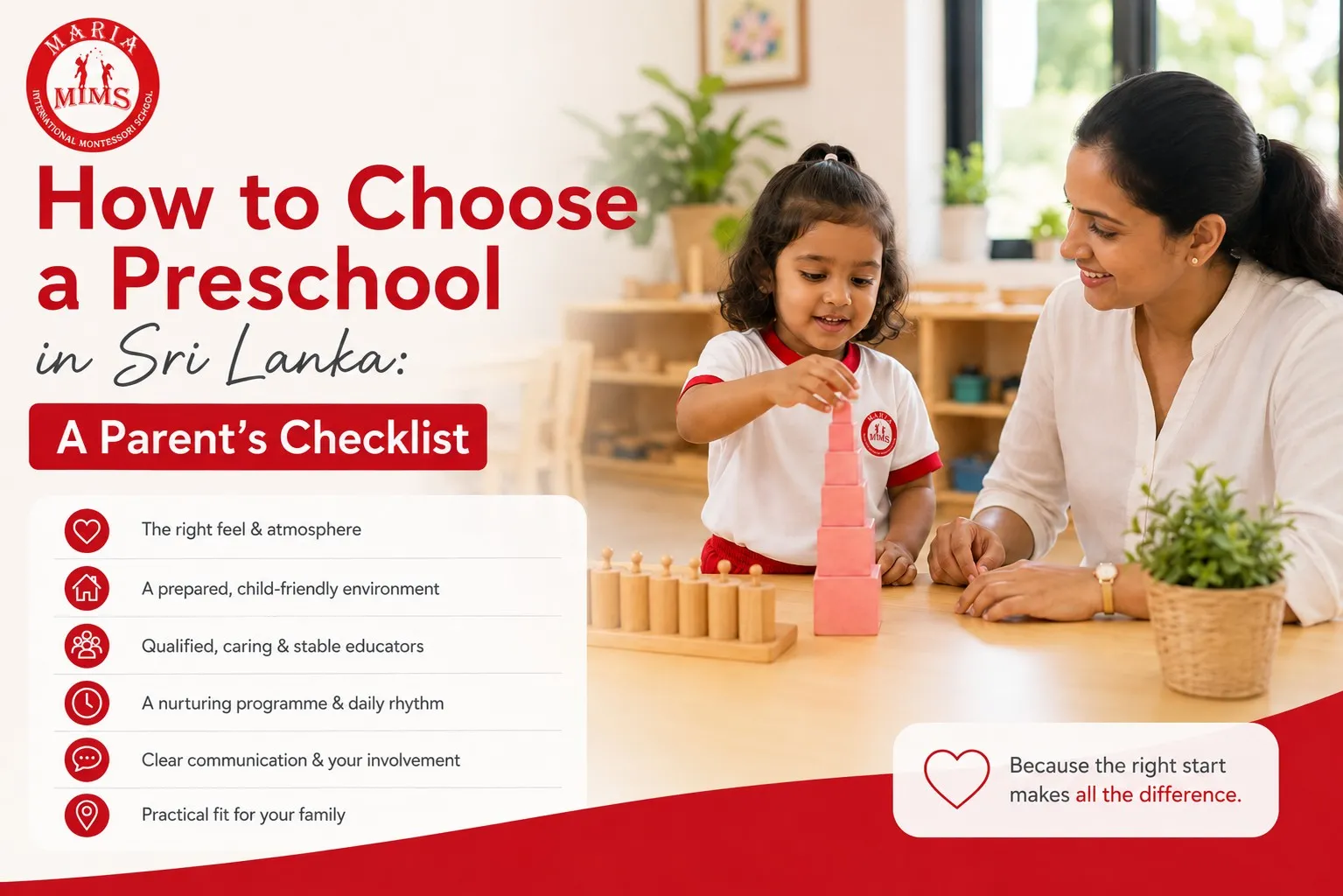
Choosing your child’s first school is one of those decisions that can feel far bigger than the paperwork suggests. You are not just picking a building or a timetable — you are choosing the people and the place that will shape some of your child’s earliest memories. It deserves care, but it does not have to be overwhelming. Here is a calm, practical checklist to help you decide well.
Start with how the place feels
Before you weigh up fees or facilities, notice how a school feels the moment you walk in. Are the children calm and engaged, or restless and waiting to be entertained? Do the adults speak to children warmly, at their level, and by name? A good early-years setting has an unmistakable atmosphere: purposeful, gentle, and unhurried. Trust that first impression — your instincts are data too.
Look closely at the environment
Walk through the actual spaces your child will use, not just the reception area. Look for:
- Clean, bright, child-scaled rooms where everything is within a child’s reach.
- Real materials and activities on the shelves, rather than screens or plastic clutter.
- Safe, welcoming outdoor space — daily time outdoors should be part of the rhythm, not a rare treat.
- Calm, dignified washrooms sized for small children.
The environment tells you what a school truly values, often more honestly than any brochure.
Ask about the things that matter most
A good school will welcome your questions. Some worth asking on every tour:
- How many children are in each group, and how many adults?
- How are the educators trained, and how long do they typically stay?
- What does a normal day look like, from drop-off to pick-up?
- How do you settle a nervous child, and how will you keep me informed?
- How do you handle illness, allergies, and collecting my child safely?
You are listening not only for the answers, but for the tone. Warmth, honesty, and a lack of defensiveness say a great deal.
Weigh qualifications and continuity
In the early years, the adults matter more than almost anything else. Ask about the educators’ training and experience, and about staff turnover — children thrive on familiar, consistent relationships. A settled, well-supported team is one of the clearest signs of a healthy school.
Understand the fees — and the value
Fees are a fair question, and a good school will talk you through them clearly and without pressure. But try to look past the number to what it buys: small groups, trained educators, real materials, wholesome food, and genuine care. The cheapest option is rarely the most economical if your child is not happy and well cared for.
Think about the practical fit
Finally, the ordinary logistics matter more than parents expect. Consider the location and your daily commute, the hours and how flexible they are, and whether the school can grow with your family — including care for siblings of different ages. A school that fits your real life is one you will actually be able to sustain.
Trust yourself
You know your child better than anyone. Use a checklist to make sure you have looked carefully — then let your instincts have the final word. The right school will feel less like a compromise and more like a relief.
If you are weighing up options near Ratmalana, Mount Lavinia or Dehiwala, we would be glad to help. Learn how joining us works on our Admissions page, or get in touch with any question at all — there is no such thing as a silly one.